

Intelligent Automation: Definition, How it Works, and Benefits

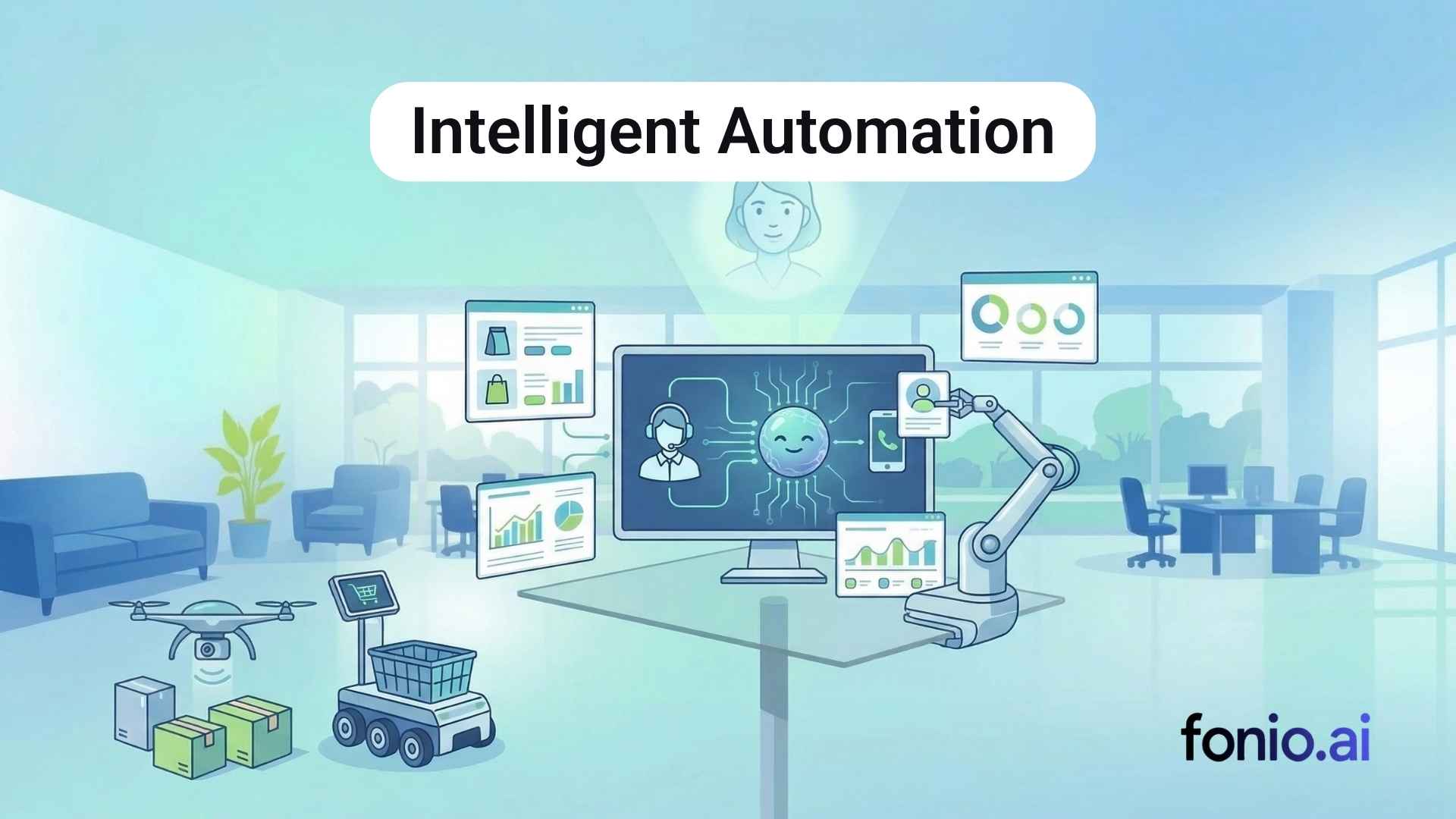
Intelligent automation is based on artificial intelligence (AI) and is combined with robotic process automation (RPA) as well as business process management (BPM) and incorporates machine learning (ML), among other things. Intelligent automation consists of advanced technologies that optimize processes within a company.
Intelligent automation is also known as cognitive automation or intelligent process automation and it allows automated business processes within the company as well as the takeover of repetitive tasks with various forms of automation. The advantages of smart automation include saving resources, reducing internal costs, and improving efficiency within the company.
Intelligent automation helps with adaptive decision-making, error detection, knowledge expansion, and problem solving. This was revealed in the study “A systematic literature review on intelligent automation: Aligning concepts from theory, practice, and future perspectives” by K.K.H. Ng et al., published in 2021 in the scientific journal “Advanced Engineering Informatics”.
The use of intelligent automation is designed to support the company by creating new opportunities for productive business processes. At fonio, we offer an AI Phone Assistant for automation that helps companies with customer communication on the phone, answers calls around the clock, and conducts human-like telephone conversations with customers.
Intelligent automation can be used to connect multiple systems, technologies, and data to enable more efficient processes within a company. Fonio's AI Phone Assistant can be integrated into company systems to, for example, book or check orders or appointments directly via a provided API interface.
What is Intelligent Automation?
Intelligent automation is a combination of AI and automation technologies, whereby various software processes work together. The collaboration of software processes is important for improving and accelerating workflows within a company and executing them largely without human involvement.
Intelligent automation uses robot-controlled process automation and cognitive technologies such as machine learning and natural language processing (NLP). The goal of smart automation is to automate both recurring, rule-based tasks as well as knowledge-based and adaptive activities.
Intelligent automation makes it possible to create end-to-end automation within a company. End-to-end automation automates entire business processes from start to finish, without any manual intervention between process steps. Intelligent automation includes all sub-processes, systems, and data flows within a company.
How Does Intelligent Automation Work?
Intelligent automation works by combining three main components: robotic process automation, artificial intelligence, and business process management. The three components of intelligent automation ensure that business processes are automated, self-learning, and adaptable.
Robotic process automation uses software robots to perform rule-based, repetitive tasks such as data entry, filling out forms, or forwarding information between systems. Artificial intelligence works with machine learning and natural language processing, thereby expanding automation with cognitive capabilities.
Business process management is used to analyze, control, and optimize digitized business processes. BPM ensures that appropriate workflows are automated in order to standardize business processes. With its three main components, intelligent automation solves problems, recognizes patterns, as well as simulates human actions, and it does so faster than humans.
In addition to RPA, AI, and BPM, smart automation also works with technologies such as optical character recognition (OCR), document information extraction (DOX), and intelligent document processing (IDP). OCR reads numbers and letters from paper documents and PDFs in conjunction with machine learning. DOX reads tables and headings from tables as well as text and images from scanned documents. IDP extracts data from documents and integrates it into business processes.
What are the Advantages of Intelligent Automation?
The advantages of intelligent automation are that it reduces manual tasks, allows increased efficiency within the company, and leads to better use of resources. Intelligent automation accelerates processes in companies, reduces costs, and improves customer experience.
All the advantages of intelligent automation are listed in detail below.
Reduces manual tasks: Intelligent automation reduces manual tasks by relieving staff and employees of routine activities. Simple, repetitive tasks are handled by smart technologies.
Enables increased efficiency: Intelligent automation offers increased efficiency, as employees can focus on more complex tasks. With intelligent automation, tasks are performed more reliably and more tasks are completed without compromising performance or quality.
Leads to better use of resources: Intelligent automation leads to better use of resources, as employees have more time for demanding tasks. Intelligent automation creates flexible business processes and more time for personalized customer contact.
Accelerates processes: Intelligent automation accelerates processes within the company by enabling faster product manufacturing and more effective workflows. Intelligent automation automates consistent processes and ensures performance optimization through continuous learning.
Reduces costs: Intelligent automation reduces costs within the company by reducing risks, improving employee productivity, and ensuring fewer failures thanks to the constant evaluation of processes. Consistent quality with intelligent automation means a faster ROI is achieved.
Improves customer experience: Intelligent automation improves customer experience by providing reliable customer service. Intelligent automation is capable of providing quick answers to customer questions 24/7 and recognizing as well as handling customer concerns.
Which Tasks can be Intelligently Automated?
Tasks such as data analysis, customer service, error detection, and email processing can be intelligently automated. Many companies are implementing intelligent automation for administrative tasks, production and logistics, software development, as well as marketing.
Below, we present the tasks that can be intelligently automated.
1. Data Analysis
Data analysis can be intelligently automated, as machine learning allows sales and demand forecasts, for example. Intelligent automation enables you to perform customer analyses, financial forecasts, risk assessments, and quality control. The goal of data analysis with intelligent automation is to recognize patterns and to make predictions.
2. Customer Service
Customer service can be intelligently automated by using chat or voice bots or fonio's AI Phone Assistant for support, appointment scheduling, and answering frequently asked questions. Intelligent automation in customer service ensures that natural language from customers is recognized and processed, producing transcripts or translations for company management. The goal of automating customer service is to make the company available 24/7 and handle standard inquiries.
3. Error Detection
Error detection can be intelligently automated by constantly monitoring invoices, receipts, bookings, machines, as well as software and checking them for deviations. Intelligent automation is capable of detecting defects, incorrect bookings, typos, and system errors at an early stage. The goal of intelligent automation in error detection is to identify errors early on, reduce risks, and ensure high quality.
4. Email Processing
Email processing can be intelligently automated by automatically categorizing, replying to, or forwarding emails. Intelligent automation is used to generate email templates, analyze email content, and automate workflows. The goal of intelligent automation in email processing is to automatically manage the email inbox, shorten response times, and reduce the workload on employees.
5. Administrative Tasks
Administrative tasks can be intelligently automated by using OCR to recognize invoices and receipts and linking them to accounting software. Smart automation allows data to be transferred between multiple systems and reports such as sales reports, status reports or management reports to be generated automatically. The goal of intelligent automation of administrative tasks is to save time and reduce careless errors.
6. Production and Logistics
Production and logistics can be intelligently automated by having machines take over predictive maintenance. In production and logistics, for example, collaborative robots take over monotonous work steps. With intelligent automation for production and logistics, warehouse management is automated, and route optimization for suppliers is created, among other things. The goal of intelligent automation in production and logistics is to achieve greater efficiency and precision.
7. Software Development
Software development can be intelligently automated, for example by performing automated tests and code reviews. Intelligent automation is capable of monitoring IT systems, detecting deviations and errors at an early stage, and providing coding assistance. The goal of intelligent automation in software development is to make work faster, more secure, and less manual.
8. Marketing
Marketing can be intelligently automated, for example by creating personalized product recommendations for customers and users as well as tracking and analyzing customer behavior. Intelligent automation can be used to generate content for marketing on websites or social networks in the form of text, images, and videos. The goal of marketing automation is to address customers in a data-driven way.
Examples of Intelligent Automation
One example of intelligent automation is automatic damage assessment using RPA and rapid claims as well as document processing for insurance companies. In customer service, intelligent automation handles the automated processing of complaints and the resulting ideas for product or service improvement.
In finance, intelligent automation is used, for example, for AI-supported fraud detection in combination with automated transaction checks. In human resources, intelligent automation takes over applicant management by scanning resumes and prioritizing candidates for interviews.
In call centers or other companies with a high volume of calls, intelligent automation ensures that employees have to answer fewer calls. For intelligent automation in call centers, chatbots or AI Phone Assistants such as the one from fonio are used, for example, to quickly process customer requests.
Intelligent Automation with fonio
Intelligent automation can be achieved with fonio by integrating the AI Phone Assistant into business processes. Our AI Phone Assistant efficiently handles calls, quickly processes customer inquiries, and thus reduces the workload on employees.
With our AI Phone Assistant as intelligent automation, companies benefit from higher customer satisfaction. With fonio, all calls are answered, intelligently processed, and recorded. If you implement the phone assistant appropriately, calls and information are processed intelligently and delivered exactly where you need them.
Thanks to advanced speech recognition and natural language processing, fonio's AI Phone Assistant responds to requests as reliably as a human employee and is available around the clock. Our digital phone assistant can be seamlessly integrated into existing IT and CRM systems, enabling processes to run automatically and at the same time in a personalized manner.
With the implementation of the fonio AI Phone Assistant, companies and employees gain more time for specialist tasks. The AI Phone Assistant automatically handles recurring phone calls and answers questions on the phone. More than 3,000 customers already use our AI Phone Assistant for the intelligent automation of their business.
The fonio AI Phone Assistant as intelligent automation can be set up in just a few minutes. To implement it, all you need to do is write a suitable prompt or use a template and then connect the intelligent Assistant to the desired systems. Purchase an AI number directly from fonio or integrate it via a SIP trunk, and your AI Assistant will be up and running in no time.


